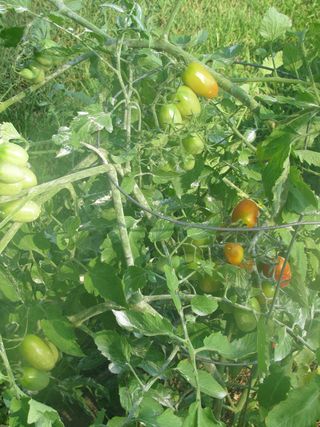
 Like freezing corn, tomatoes will lose some of their sweetness. Never store them in the refrigerator for this reason. However, if you are like me the vines are popping with every size and color of tomato and the neighbors are running for fear you are bringing them more. So what do you do? Freeze them.
I remember at one time freezing wasn't recommended without first making a sauce or paste, but the folks over at Grit Magazine say differently. Do you subscribe to Grit? I highly recommend it!
From the folks at Grit...
Tomatoes are easy to freeze. They can be frozen in many forms, depending on your intended usage. One thing to remember: their skins will become tough after freezing, so in most cases you will want to remove the skins before using the ‘maters in your cooking. You can do this easily before freezing by popping the tomato into boiling water for just 45 seconds to a minute, depending on size, fish it out and ease it into a bowl of ice water for 5-10 minutes. This will cause the skin to split and it will peel off easily; just peel it with your fingers like peeling a grape. You can then chop it into cubes, dice it, or puree it before freezing. You can freeze them whole if you like, but they take up a lot of room in the freezer this way. If you will be cutting the tomatoes into wedges, you may want to wait to remove the skins; when they thaw out the skins will slip right off. No need to fuss with blanching and icing now.
 First, take a friend or two with you to the garden and gather yourself a mess of tomatoes and bring them to the kitchen. Pull out a very sharp knife, cutting board and a cookie sheet. The nice thing about freezing is that they can be done in small batches with a minimum of fuss and equipment.
Wash the tomatoes and remove the stem. I always leave the stem-stump on the tomato until we use it to prevent the stem scar from absorbing impurities from the air and while washing. When washing them, do not dump a load onto a sink full of water, again, the stem scar works like a sponge and will pull some of the dirty water into the tomato while it’s soaking. Don’t use soap. What is recommended to use is a solution of four parts water to one part vinegar. This “vegetable wash” can be used on most of your produce to kill the majority of the bacteria on the skin and greatly extend storage time of the fresh tomato on your counter or in the fridge. We do not refrigerate fresh tomatoes because it changes their flavor. Most store bought tomatoes have no flavor, so it doesn’t matter.
I quarter each tomato by cutting it once along the core line, cutting out the stem scar area, then cutting across the diameter of the tomato instead of lengthwise. This exposes all of the chambers where the seedy-goop is hiding, making it easy to remove.
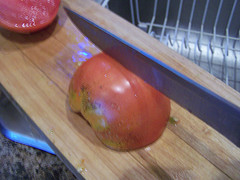
This stuff does not freeze well and adds little to the nutritional value. The “meat” of the tomato is what you’re after. If you want to be especially frugal, clean the tomatoes over a colander sitting in a bowl. This will strain out the seeds and let the juice through to the bowl. You can put the juice in a jar and refrigerate it for use in cooking or making energy drinks. Dispose of the seeds carefully… if you compost them you’ll have bazillions of baby tomato plants popping up in your compost in no time.
HINT:If you’re a seed-saver, spread the seeds on paper towels to dry, roll up the paper towels and store them in an air tight canister in a cool place for next year. To plant, just tear the paper towels into chunks with two or three seeds stuck to each and plant them in starter pots – paper and all. When they come up, thin them by removing the weaker seedlings.
Do not *wash* the seeds out of the chambers, you want the tomato to be as dry as you can get it before freezing so excess ice does not form on its surface.
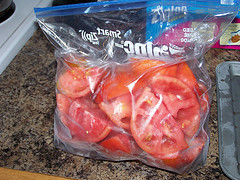
Lay the wedges skin down on a cookie sheet and slide it in the freezer for a couple of hours. Once they are frozen firmly, transfer them quickly to a zip-lock freezer bag, remove as much air as possible (one of those vacuum food preservation systems would be nice) and set the bag in your deep freeze for long term storage.
Done this way, the tomatoes don't freeze into one solid clump; you can open the bag and take out what you need as you need it. You may have to smack it around a little after extended time in the freezer, but the tomato wedges will break apart. If you tossed them into a bag as you cut them, then into the freezer they will freeze together requiring you to thaw the whole bag to use any of it.
When freezing tomatoes in a “wet” form (chopped or pureed) bag them in sizes appropriate to your typical use. If you will be using a gallon of tomatoes each time you make soup, stew or casseroles, then by all means use the gallon bags. If smaller portions are more appropriate, use quart or pint bags to reduce storage hassles and waste after thawing.